Cultivating change: Community gardens within Norwegian Arctic foodscapes
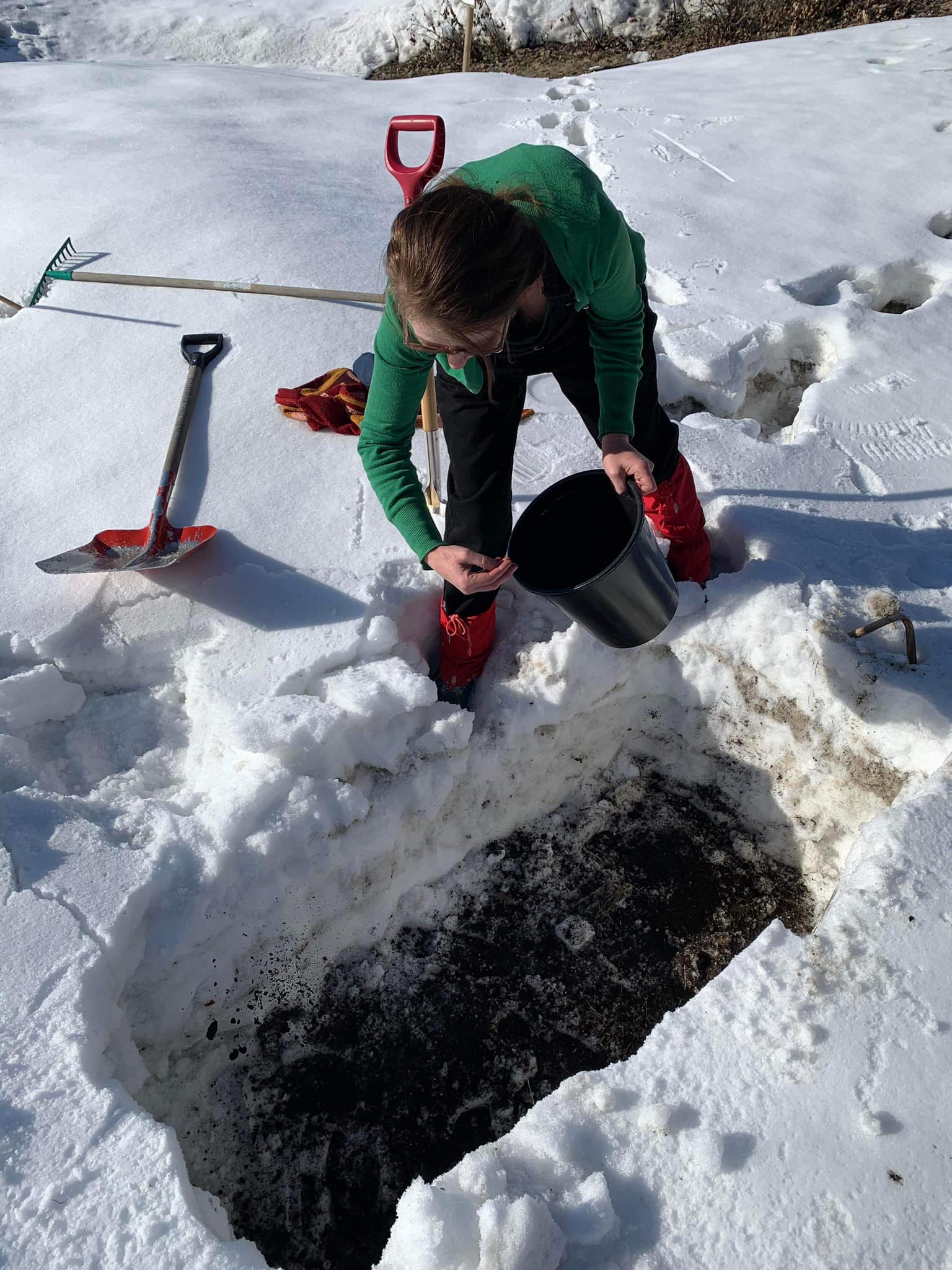
When entering an active community garden, it is easy to see that the people involved care for the garden. You can see it in the totality or in the details, in the purposefulness of the garden design or in the “sloppy” maintenance that provides a home for the insects. Garden members share concern for the soil, consideration for the plants, compassion for the insects, and care for each other, their homeplace and the planet. The garden is soil, plants, fungi, insects, other animals, people, close and distant surroundings, and the interconnections in between. There is little new about this. So, what is it about the emerging and expanding Arctic community gardens that makes them more than simply spaces for people who share an interest in growing food? Can communities formed around food cultivation and care for humans and non-humans be seen as transformative actors or even actors of protest?
This project is rooted in section for societal planning at the Department of Social Science, UiT. The project is investigating community gardens within their local communities and their foodscapes in Arctic Norway. The concept of foodscapes refers to the more-than-human geography of food, and the production and consumption of food as a relational process. The project aims to build an understanding of the foodscapes in which the communities I study are embedded.
Main problem statement: How can community gardens in Arctic Norway be understood as both acts on change and change through acts?
The primary objective of the project is to develop a comprehensive understanding of Arctic community gardens and their practices, relations and knowledges. The project seeks to investigate participants’ interactions with one another, with plants, insects and soil, with the landscape and with their home place, as well as their encounters with broader local and planetary challenges.
By engaging with both the material and relational dimensions of Arctic community gardens, the project addresses pressing contemporary crises such as climate change, nature loss, overconsumption and democratic erosion, but also something more intimate: how people cultivate care, responsibility and belonging in times of uncertainty. The gardens represent more than sites of food production; they are spaces where humans, nature and place meet and interact, creating new forms of community, care and belonging. Such knowledge is important because Arctic community gardens can reveal how local communities adapt and react/respond to climate change and broader societal transformations. It is crucial to understand how actions in and through the gardens both respond to and make change – socially, materially and more-than-human. Through this focus, the project not only contributes to theoretical debates on socioecological transformation but also advances cross-disciplinary methodological innovation within more-than-human ontologies.
Key concepts for the study are change, care and place.
The project is linked to the research groups Place, Power and Mobility (Sted, Makt og Mobilitet) and Environmental Humanities.