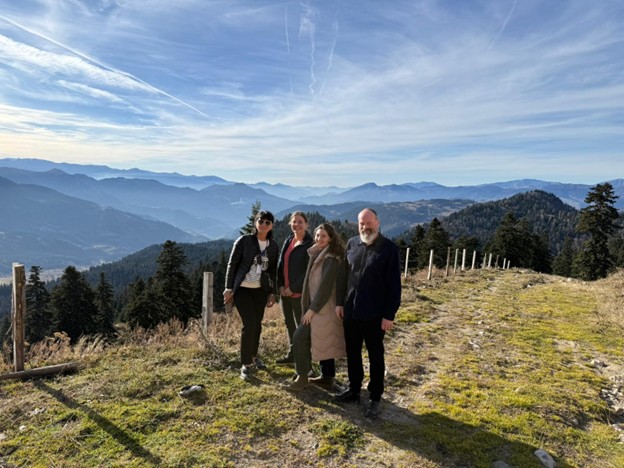
Welcome to the Global and Environmental Health Research Group!
Our research group is dedicated to advancing knowledge in global and environmental health through primarily epidemiological studies. We focus on vulnerable populations, particularly women and children, in diverse global health settings.
Our key areas of work:
Perinatal and maternal health: Investigating risk factors and health outcomes for mothers and newborns.
Environmental epidemiology: Studying the impact of environmental factors on health, particularly widespread contaminants, such as lead (Pb).
Non-communicable and communicable disease epidemiology: Assessing disease trends, risk factors and possible preventive measures.
Our mission is to influence public health policy and practice through research that addresses the systemic factors shaping the health of the global population, and especially the health of women and children.
We are always eager to establish new collaborations and partnerships, so please don't hesitate to contact us.
Establishing research collaboration with Ghana: A Visit by UiT's Global and Environmental Health research group
06.03.2026
Ana Aslanikashvili has defended her PhD thesis!
11.12.2025
Investigating lead exposure in Adjara: A research journey to western Georgia
Establishing research collaboration with Ghana: A Visit by UiT's Global and Environmental Health research group
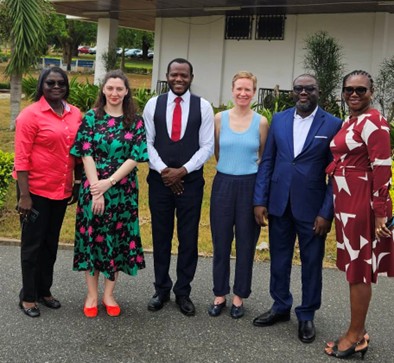
In March 2026, the Global and Environmental Health Research Group visited Accra, Ghana, to explore research collaboration opportunities with key institutions. The visit aimed to identify topics for addressing critical health challenges, particularly in maternal and child health.
Over several days, we engaged with academic institutions, international organizations, and government health services, gaining valuable insights into Ghana’s healthcare landscape and identifying areas for joint research. Associate professor Ingvild Hersoug Nedberg from Department of Health and Care Sciences at UiT and postdoc Tinatin Manjavidze from Department of Community Medicine at UiT had visits with representatives from University of Ghana, UNFPA Ghana office and Ghana Health Service.
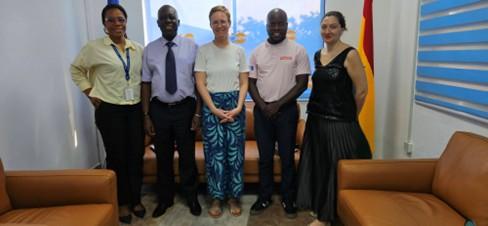
Meeting between representatives of University of Ghana and UiT. Foto: Tinatin ManjavidzeGhana faces significant challenges in maternal and child health despite high antenatal care (ANC) coverage and skilled birth attendance rates. Maternal mortality remains alarmingly high, with hypertensive disorders, hemorrhage, and delays in care being the leading causes of death. Sociocultural factors, financial barriers, and gaps in the quality of care were highlighted as critical contributors.
While maternal healthcare is officially free, hidden costs such as transportation, medication, and out-of-pocket expenses for procedures like cesarean sections create financial burdens for many families. Additionally, systemic issues such as staff shortages in rural areas, brain drain, and disparities in resource allocation between urban and rural regions exacerbate the problem.
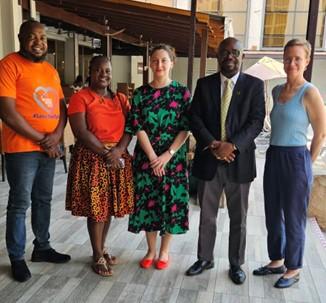
Meeting between representatives from Ghana Health Service and UiT Foto: Tinatin Manjavidze
Health information systems, including the Ghana Health Information Management System (GHIMS) and DHMIS2, are in place but face some challenges related to completeness and interoperability. Strengthening these systems is essential for evidence-based decision-making and improving maternal health outcomes.
This visit marks the beginning of a promising partnership between UiT and Ghanaian institutions. We are committed to developing joint research proposals that address these critical health challenges, with a focus on maternal and child health and health systems strengthening.
We are excited about the potential for impactful collaboration and look forward to working together!
Meeting between representatives from UNFPA and UiT Foto: Tinatin Manjavidze Published: 20.03.2026
Link to this page
Ana Aslanikashvili has defended her PhD thesis!
On 6 March, Ana Aslaniskahvili successfully defended her PhD thesis!
Ana's thesis was entitled "Hepatitis C infection, treatment status and extrahepatic outcomes in Georgia - Addressing COVID-19 and cardiovascular disease hospitalizations, and adverse perinatal outcomes".
Here is a short popular science summary of Ana's work:
Hepatitis C is best known as a virus that damages the liver, but it can also affect other parts of the body. Although the infection can be cured, many people with hepatitis C do not know they are infected. In this study, we used national health records from Georgia to compare people with and without hepatitis C, and to examine whether treatment made a difference. We found that people with hepatitis C who were not treated had a higher risk of severe COVID-19, hospitalization for heart and blood vessel disease, and complications during pregnancy, compared with people without the infection. In contrast, people who received treatment did not show an increased risk of these outcomes. These results highlight that hepatitis C affects more than the liver and underline the importance of widespread testing and access to treatment.
Big congratulations to Ana and best wishes for the future!
Investigating lead exposure in Adjara: A research journey to western Georgia
In a collaborative effort between researchers from UiT and the National Center for Disease Control (NCDC) in Georgia, we embarked on fieldwork in the Adjara region of Georgia in mid-November 2025. Our mission was to identify potential sources of exposure to the toxic metal lead among Adjarian children by closely examining the living environments, practices, and traditions of local families. This journey was not only a scientific endeavor but also an enriching personal experience, as we connected with the community and gained valuable insights into their daily lives.
Why lead?
Lead exposure remains a significant public health concern globally, particularly in low- and middle-income countries. Georgia is identified as a high lead exposure country, thus understanding the sources of lead exposure in Georgia is critical for protecting current and future generations.
Why Adjara?
The Adjara region, located in southwestern Georgia, is known for its stunning landscapes, rich cultural heritage, and unique traditions. However, Adjara also faces challenges related to lead exposure. In 2018, strongly elevated blood lead levels were identified in Georgia and specifically among children in Adjara. Since then, the levels have declined in the population but remain strongly elevated in certain families. All sources of lead exposure are yet to be identified.
Our approach: understanding lives, not just numbers. Foto: Tinatin Manjavidze
What we did
Two years ago, we conducted similar fieldwork in the Adjara region, visiting 20 families to collect blood samples and environmental samples for the analysis of total lead and lead isotope profiles. This year, we returned to some of these families for more in-depth investigations. Our work included qualitative interviews, blood sampling of all family members, broader environmental sampling, and detailed field observations.
Our goal was to go beyond surface-level observations and gain a deeper understanding of the daily lives of the families we visited. This involved exploring their living practices, habits, behaviors, cooking traditions, and much more.
A key aspect of our work was maintaining a delicate balance between conducting scientific research and respecting the privacy and traditions of the families. Building trust was essential, and we approached our work with great sensitivity and respect.
The way forward
The next step is to analyze all the samples and data we collected. Once the results are ready, we will communicate them back to the families and provide individual recommendations. Additionally, we will share our findings with local and national authorities, as well as the scientific community.
In the long run, we aim to collaborate with local authorities and communities to implement targeted interventions and raise awareness about the risks of lead poisoning.
Lessons learned
Our journey was both a fantastic scientific endeavor and a great personal experience. As epidemiologists, we often work with numerical data, but our fieldwork over the past two years has shown us that complex issue like childhood lead exposure cannot be addressed through numbers alone. It requires qualitative insights into people’s lives, habits, and—most importantly—on-site observations. By understanding the intricate connections between environment, culture, and health, we can work toward a future where every family has the opportunity to thrive in a safe and healthy environment.
The research team: Tako Jankhoteli, Charlotta Rylander, Tinatin Manjavidze, Erik Eik Anda Foto: Giorgi, NCDC