

Prisvinner 2026
Professor John P. Smol
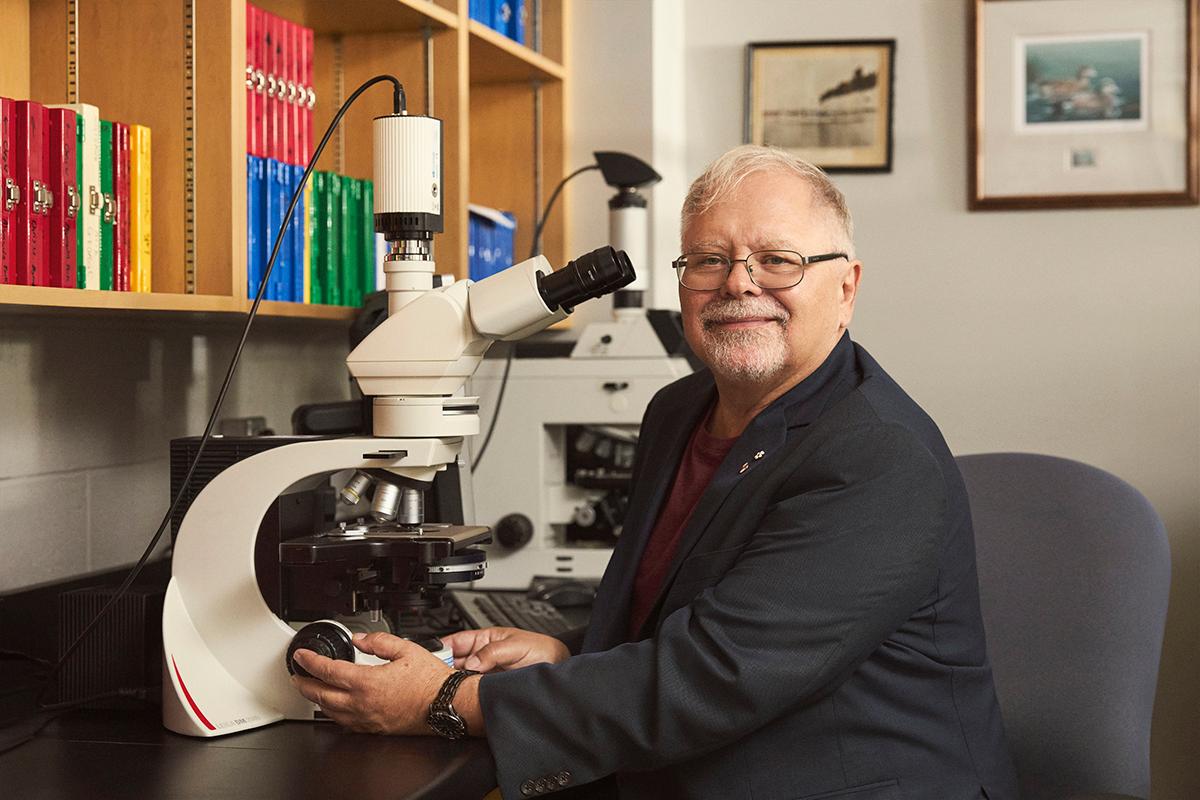
Tildelingen av Mohnprisen til Smol er mer enn en akademisk anerkjennelse. Det er en hyllest til en metode som gir oss nøkkelen til å forstå fortiden, og dermed navigere fremtiden.
Smol er en vitenskapelig detektiv. Hans åsted er arktiske innsjøer. Hans ledetråder er mikroskopiske rester av liv, fanget i gjørme (sedimentlag) på bunnen av innsjøene. Ved å lese disse lagene, som kan være hundretusener av år gamle, som sidene i en historiebok, avdekker han hvordan økosystemer har reagert på endringer gjennom århundrene.
Hans arbeid har gitt oss metoder for å identifisere tidlige varselsignaler på økologiske forstyrrelser. Gjennom å studere kiselalger og andre mikroskopiske organismer, kan han presist dokumentere når en innsjø ble surere, når forurensning først dukket opp, eller hvordan livet i vannet endret seg da klimaet ble varmere.
Dette er ikke bare akademisk nysgjerrighet. Det er kunnskap med enorm praktisk verdi. Smols forskning har levert konkrete funn som har ført til tiltak mot sur nedbør og forurensning, med verdi langt utover lokalsamfunn. Han gir beslutningstakere det de trenger mest: et solid, vitenskapelig fundament for å handle.
Smol har en unik evne til å bygge bro mellom fortid og nåtid. Han viser oss at innsjøene har en hukommelse. Denne hukommelsen er vår beste referanse for å vurdere de endringene vi ser i dag. Uten et klart bilde av hvordan et økosystem så ut før industriell påvirkning, famler vi i blinde når vi skal sette mål for forvaltning, restaurering og bevaring.
Når statsminister Jonas Gahr Støre i dag overrakte prisen til professor John Smol på Arctic Frontiers, er det fordi Smol har formet fagfeltet sitt og inspirert forskere over hele verden. Han har vist oss at de små, ofte oversette innsjøene i Arktis er følsomme arkiver over planetens helsetilstand.
Arbeidet hans har også en dypere, samfunnsmessig dimensjon. Kunnskapen han frembringer, informerer nasjonale og internasjonale forhandlinger. Den er relevant for diskusjoner om bærekraftig utvikling, urfolksrettigheter og forvaltningen av de sårbare nordområdene.
Den vitenskapelige komité skrev dette i sin anbefaling:
We highly recommend Dr. John P. Smol as the 2026 Mohn Prize laureate for his academic leadership in palaeoecological studies in Arctic lakes; developing multiple research programmes to study lake water quality and ecology under ongoing environmental change; pioneering a broad spectrum approach to study long-term changes to lake systems, including pollution, climate change and biodiversity loss; and founding the Palaeoecological Environmental Assessment and Research Laboratory (PEARL). He continues to encourage students and research scientists to study global environmental change, primarily focused on changes in Arctic lake ecosystems.
The committee recognises the importance of his groundbreaking contributions to the detection and amelioration of human impacts on Arctic freshwater ecosystems. Dr. Smol’s research has contributed significant and time-tested knowledge about how we understand nature and the dynamic effects of external drivers in freshwater and terrestrial ecosystems. His seminal contributions to more than 700 papers and more than 20 books continue to be highly influential. Dr. Smol’s palaeoecological studies of Arctic lakes, undertaken through multiple research programmes on lake water quality and ecology under environmental changes, confirms his world-class leadership.
The future of freshwater and terrestrial ecosystems in the Arctic is highly uncertain and depends largely on the trajectory of Earth’s warming climate and human activities involving contamination and high stress on the environment. To understand and respond to these changes, we need indicators that can measure environmental shifts in freshwater and terrestrial ecosystems, much like a thermometer reveals temperature. Dr. Smol’s groundbreaking research has provided exactly this: tools for detecting environmental change in and around Arctic lakes and rivers, and for understanding how these changes affect wildlife. By developing methods to identify early signals of ecological disruption, Dr. Smol’s work makes it possible to assess the ongoing impacts of climate change, contaminants, and human activities. His research has not only delivered tangible, evidence-based remediation efforts but has also informed national and international discussions, including negotiations on reconciliation and sustainable development in the Arctic. As the founder of the Palaeoecological Environmental Assessment and Research Laboratory, he has created a powerful platform for studying past environments that provides a baseline for future development.